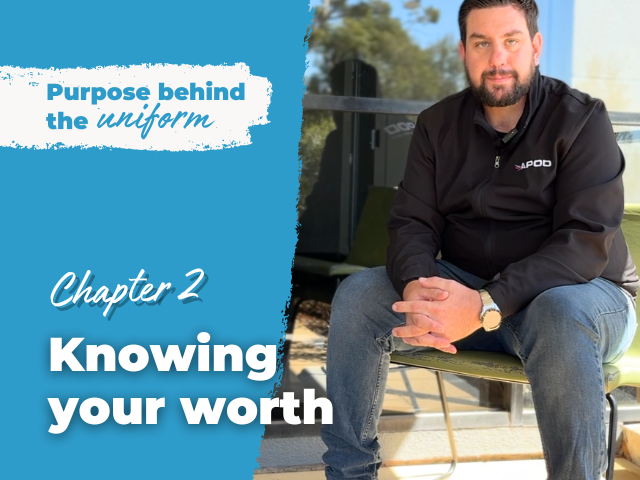
Purpose Behind the Uniform – Chapter 2: Knowing Your Worth
Following Chapter 1, APOD’s Support & Engagement Manager and Army veteran, Wesley continues his story, reflecting on the skills he gained through service – and how he learned to communicate these values in civilian life when looking for employment opportunities.
“The Government has invested hundreds of thousands, sometimes millions of dollars into developing you and your skills”.
Realising this was a turning point for me. Instead of focusing on what I lacked, I started recognising everything I had already gained.
In fact, the skills that you have honed and developed along the way are often qualities employers struggle to teach. Qualifications can be gained through study, but qualities like leadership, resilience, teamwork and performing under pressure are developed through lived experience. Once I understood this, I really started to unlock my potential and recognise my own worth.
When I left service I felt like everyone else had degrees, corporate experience and spoke a different language I did not understand. Everywhere I looked, I felt under qualified. Then I realised something important. I had something that many other candidates didn’t, lived experience.

I had experience leading people, making decisions when it mattered, remaining calm under pressure, adapting to changing situations, taking responsibility and being accountable.
Most people never receive formal training in these things but we did, every single day.
One of the biggest surprises after leaving service is realising that employers are not focused on your rank. In fact outside of the uniform you begin to understand that rank is far less important than the person behind it. Employers are not recruiting your rank. They’re recruiting you. They want to know whether you can lead, solve problems, communicate and work independently as well as part of a team. Those qualities exist for most of us regardless of whether you were a Private, Sergeant or a Colonel.

Before you can convince an employer of your value, you first need to recognise it yourself.
Until next time,
Remember this….
Knowing your worth is the first step.
Learning how to communicate it is the next mission.
– Wes.
To be continued in Chapter 3.